Exosome Surface Modification Services
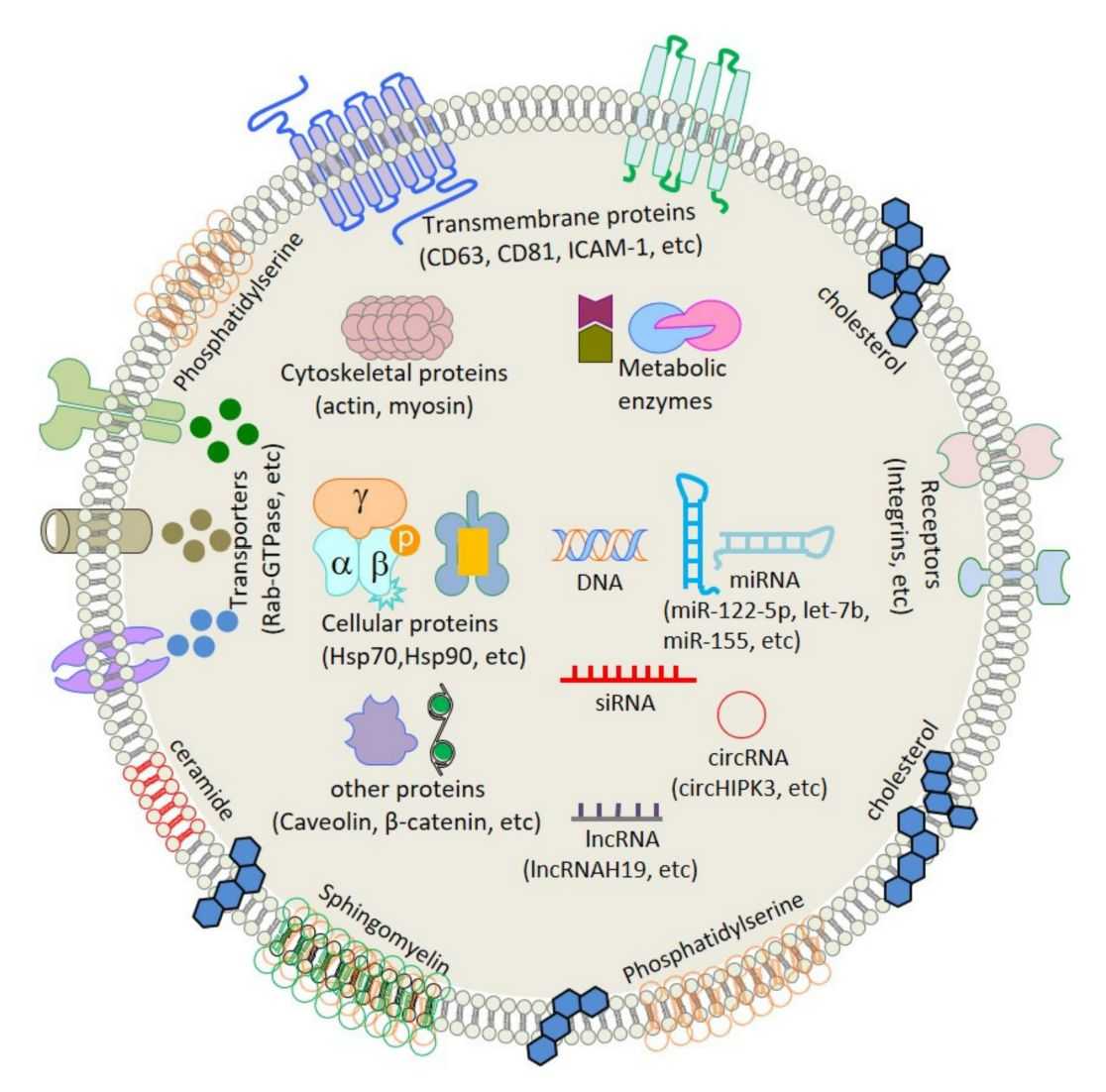
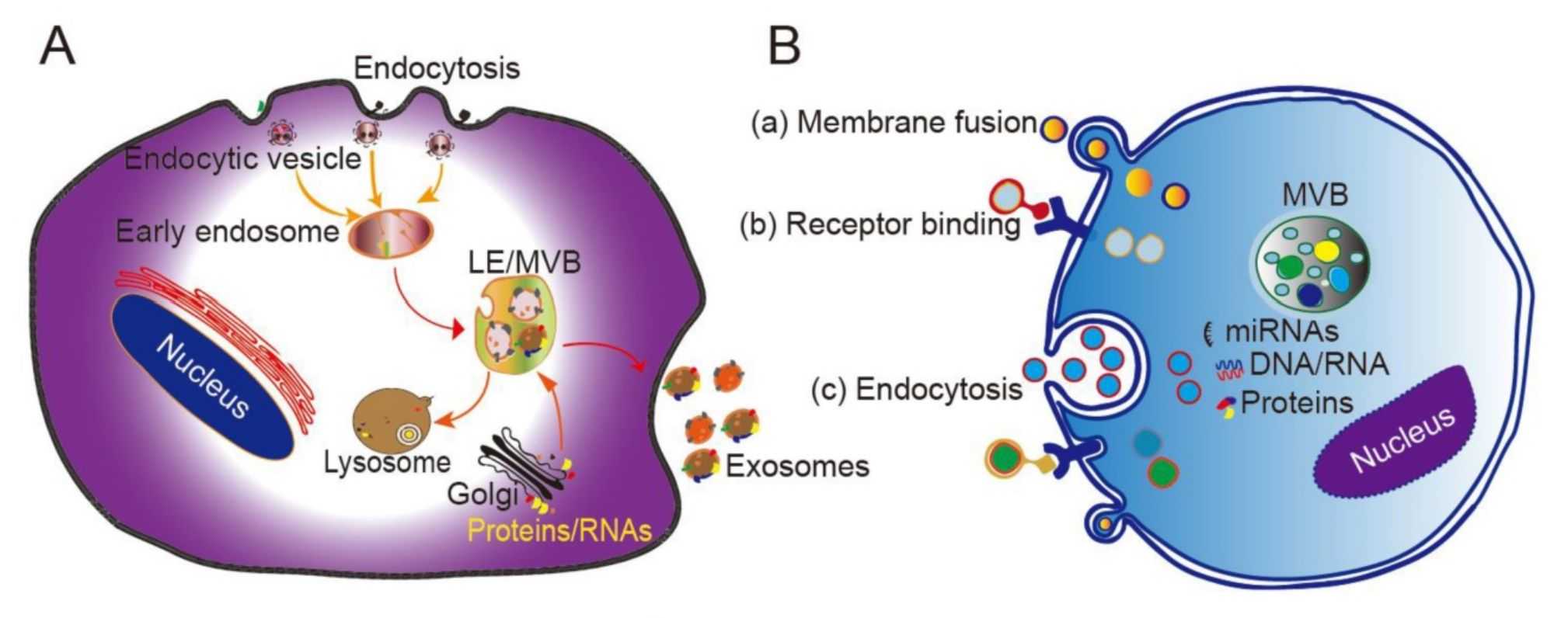
Exosome surfaces are functional, not just structural. Molecules like tetraspanins, integrins, and lipid groups influence cell binding, internalization, immune evasion, and circulation persistence. By engineering the surface with targeted ligands, stealth coatings, high-affinity moieties, or new membrane architectures, exosomes can be transformed into programmable nanocarriers.
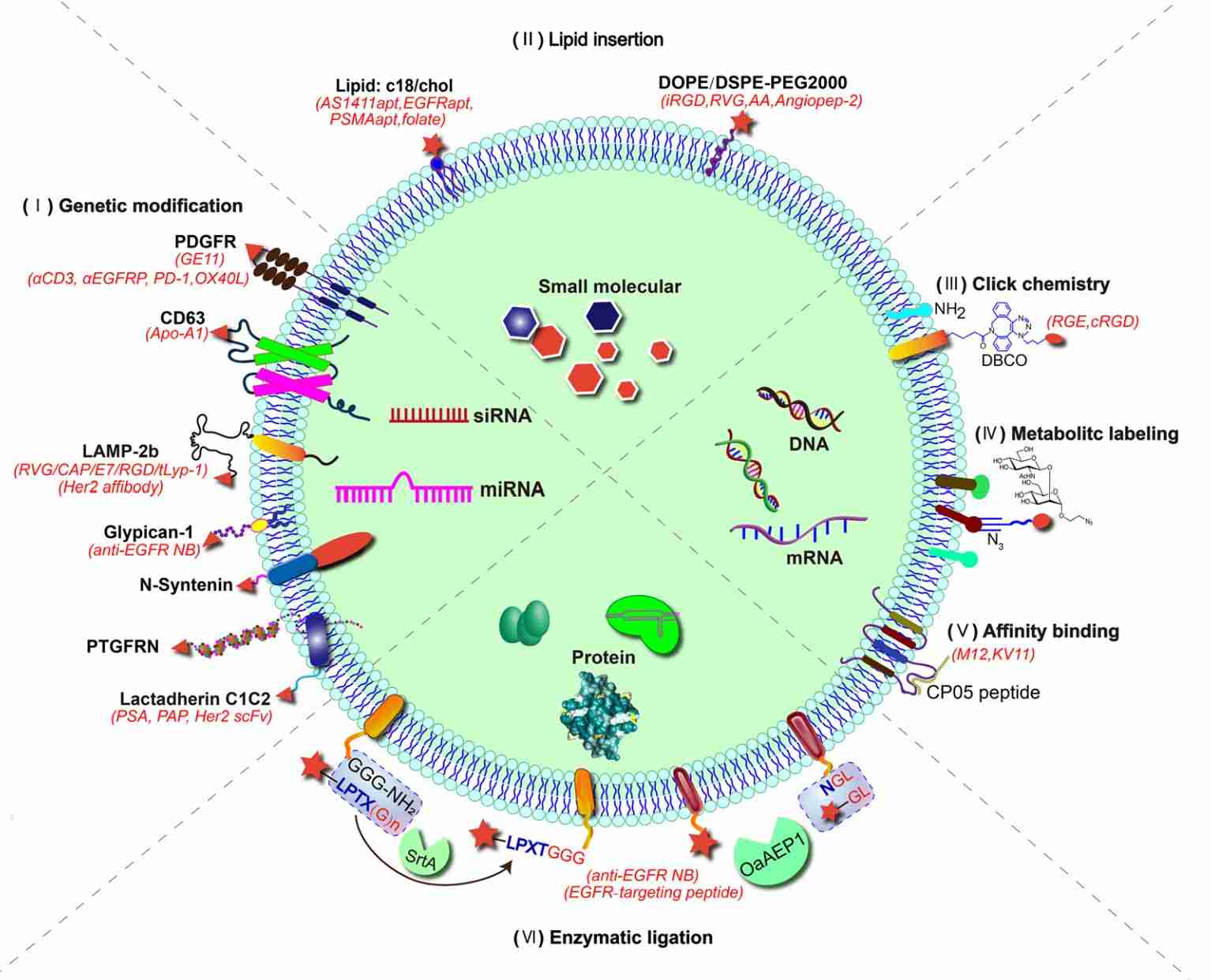
At Creative Biostructure, our exosome surface modification services offer a complete range of validated technologies across six distinct strategies. Each method is scientifically optimized and supported by comprehensive characterization to ensure modified exosomes meet your research needs, from targeted delivery to biosensing and multifunctional nanocarrier design.
Why Surface Modification Is Central to Exosome Engineering
Native exosomes, while intrinsically biocompatible and capable of natural cell-to-cell communication, face well-documented limitations when deployed for precision research or therapeutic investigation:
- Non-specific biodistribution: Native surface profiles lack programmable receptor targeting; exosomes accumulate preferentially in liver and spleen rather than intended target tissues.
- Rapid immune clearance: Opsonization and uptake by the mononuclear phagocyte system (MPS) substantially reduce circulating half-life.
- Insufficient targeting specificity: Without surface modification, exosome–cell interactions are governed by passive diffusion and non-selective membrane contact.
- Limited cargo delivery efficiency: Without active targeting, intracellular delivery of nucleic acids, proteins, or drugs to specific cell populations remains inefficient.
- Restricted functional versatility: Native exosomes cannot simultaneously display multiple functional elements (stealth + targeting + therapeutic) without deliberate surface engineering.
Surface modification addresses each of these limitations in a targeted, controllable way—positioning engineered exosomes as a more powerful experimental platform than either native exosomes or purely synthetic nanoparticles.
 Figure 1. Surface Modification Strategies for Engineered Exosomes. (Chao T, et al., 2025)
What Is Exosome Surface Modification
Exosome surface modification encompasses any deliberate alteration of the exosome membrane that introduces new molecular elements, changes surface chemistry, or restructures the vesicle bilayer to confer specific functional properties. Strategies are broadly categorized by their mechanism of action:
| Category | Mechanism | Representative Strategies |
|---|---|---|
| Molecular targeting | Display of receptor-binding molecules on exosome surface for cell-type-selective interaction | Antibodies, aptamers, targeting ligands & peptides |
| Stealth engineering | Reduction of immunogenicity and non-specific protein adsorption (opsonization) | PEGylation, CD47 display, zwitterionic coatings |
| Genetic surface display | Expression of fusion proteins on exosome surface via donor cell engineering | Lamp2b fusions, GPI-anchored proteins, CXCR4, PDL1 |
| Membrane hybridization | Physical integration of exosome bilayer with synthetic or cell-derived membranes | Exosome-liposome fusion, cell membrane coating |
| Combination engineering | Simultaneous implementation of two or more modification modalities | PEGylation + antibody, aptamer + cargo loading, genetic + chemical |
Our Exosome Surface Modification Service Portfolio
Creative Biostructure offers six specialized surface modification services, each optimized for a distinct engineering strategy. Select the approach that best aligns with your research objectives, or contact our team for a combined multi-modal solution.
1. Exosome Surface Functionalization Service with Targeting Ligands and Peptides
Chemical or genetic conjugation of short receptor-binding peptides and small-molecule ligands onto the exosome surface. Ideal for researchers requiring efficient cellular internalization, minimal steric hindrance, and flexible conjugation without the complexity of antibody-based systems.
| Parameter | Details |
|---|---|
| Ligand types supported | Tumor-targeting peptides (RGD, iRGD), CPPs (TAT), RVG, organelle-targeting motifs, custom sequences |
| Conjugation methods | Click chemistry, NHS-ester coupling, DSPE-PEG-ligand post-insertion, genetic Lamp2b fusion |
| Key advantage | Smallest molecular footprint; optimal tissue penetration; scalable chemical synthesis |
| Best for | Receptor-mediated uptake studies, BBB transport research, organelle-directed delivery |
2. Exosome PEGylation and Stealth Coating Services
Grafting of polyethylene glycol (PEG) chains or alternative stealth coatings onto the exosome surface to reduce opsonization, extend plasma circulation half-life, and minimize non-specific cellular uptake. The foundational stealth engineering strategy for systemic delivery research.
| Parameter | Details |
|---|---|
| PEG formats | DSPE-PEG (1k–5k Da), NHS-PEG, maleimide-PEG; mono- and bifunctional options |
| Coating strategies | Post-insertion, covalent NHS-ester, and hybrid PEG-ligand bifunctional coating |
| Key advantage | Reduced MPS clearance; extended half-life; reduced protein corona formation |
| Best for | Systemic delivery research, combination stealth + targeting studies, pharmacokinetic modeling |
3. Exosome Surface Modification Service with Antibodies
Site-specific conjugation of full antibodies, antibody fragments (Fab, scFv), or nanobodies to the exosome surface via validated bioconjugation chemistries. Provides the highest available binding specificity through antibody–antigen interaction, supporting precise receptor targeting across a broad range of disease models.
| Parameter | Details |
|---|---|
| Antibody formats | Full IgG, Fab, F(ab')₂, scFv |
| Conjugation strategies | NHS-ester amine coupling, maleimide-thiol, DSPE-PEG-NHS post-insertion, click chemistry, streptavidin-biotin |
| Key advantage | Highest binding specificity; broad target range; clinically validated antibody–antigen pairs |
| Best for | Tumor-targeted delivery, immune-oncology research, receptor blockade studies, clinical-relevant target models |
4. Exosome Surface Modification Service with Aptamers
Surface display of SELEX-derived DNA or RNA aptamers via cholesterol insertion, covalent conjugation, biotin–streptavidin bridging, or the Exosomal Anchor Aptamer (EAA) platform. Combines antibody-level binding specificity with the chemical versatility and scalability of synthetic oligonucleotides.
| Parameter | Details |
|---|---|
| Aptamer library | Sgc8 (PTK7), EpCAM, MUC1, PSMA, CL4 (EGFR), hBS01 (TfR/BBB), CD63, custom SELEX-derived |
| Conjugation strategies | Cholesterol/lipid insertion, click chemistry, biotin–streptavidin, EAA platform (~40 copies/exosome) |
| Key advantage | Chemical synthesis scalability; low immunogenicity; programmable by SELEX; dual targeting + nucleic acid co-loading (EAA) |
| Best for | Cancer cell targeting, BBB research, nucleic acid drug delivery, biosensing, CTC detection |
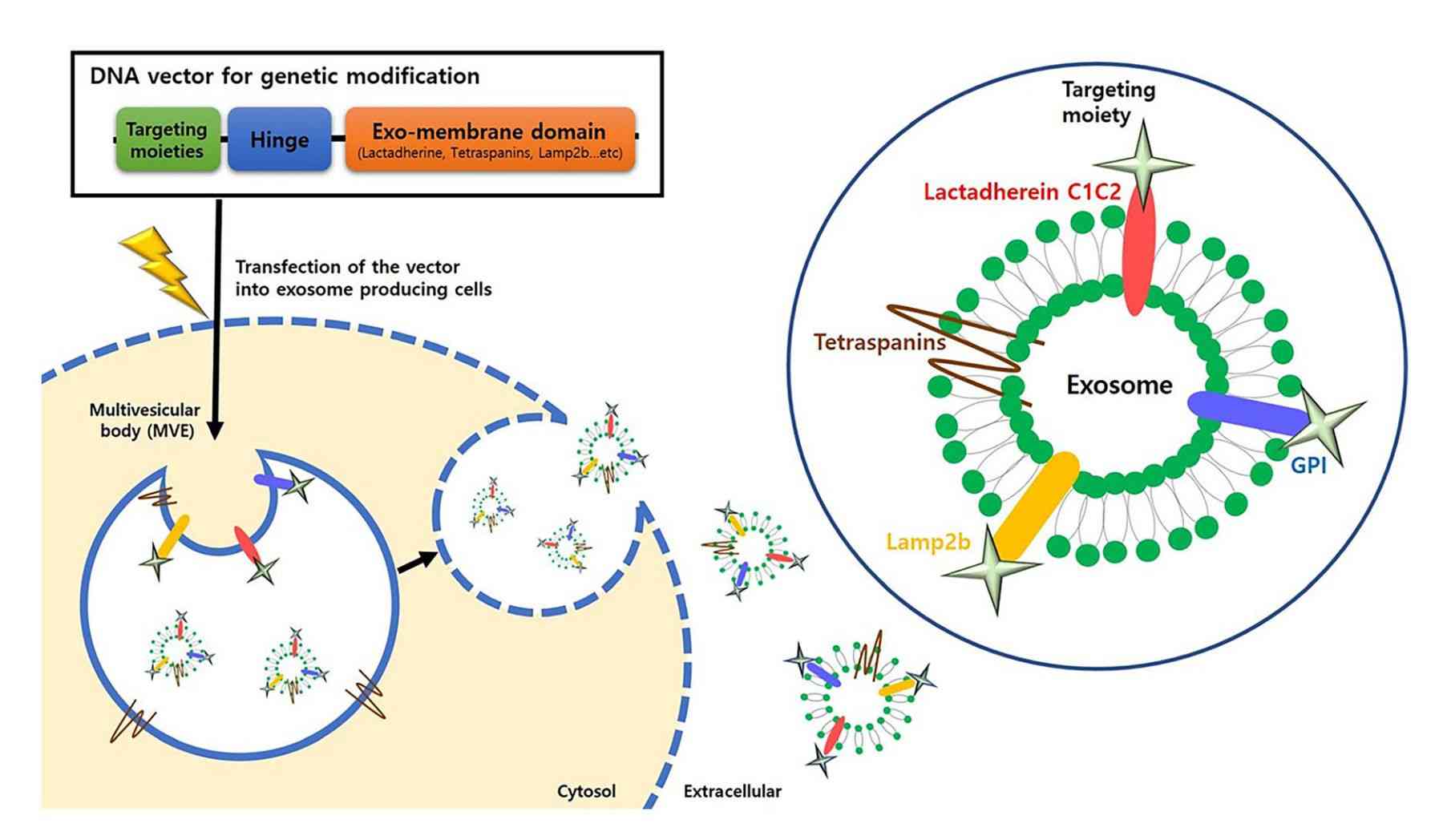
5. Genetically Engineered Exosome Surface Display Service
Engineering of donor cells to constitutively express targeting, therapeutic, or reporter fusion proteins on the exosome surface. Yields exosomes with endogenously integrated surface molecules—inherently stable, uniformly expressed, and free of post-isolation chemical modification steps.
| Parameter | Details |
|---|---|
| Display scaffolds | Lamp2b, CD63, CD9, CD81 (tetraspanin fusions); GPI-anchored proteins; transmembrane domain fusions |
| Displayable elements | Targeting peptides, nanobodies/scFv, cytokines, enzymes, fluorescent reporters, immune checkpoint ligands |
| Engineering methods | Lentiviral transduction, plasmid transfection |
| Key advantage | Endogenous, orientation-controlled, reproducible surface display; no post-isolation chemical steps required |
| Best for | Stable reporter exosomes, multivalent ligand display, immunotherapy platforms, mechanistic cell biology studies |
6. Exosome Membrane Fusion and Hybridization Services
Physical fusion of exosome membranes with liposomes, cell-derived plasma membranes, or fusogenic nanocarriers to generate hybrid vesicles with expanded cargo loading capacity, transferred membrane protein functionality, and engineered surface chemistry. The preferred strategy when native exosome cargo loading limitations must be overcome.
| Parameter | Details |
|---|---|
| Fusion strategies | Freeze–thaw, extrusion, PEG-mediated, cell membrane co-extrusion, fusogenic liposome hybridization |
| Cell membrane sources | Tumor, macrophage, platelet, RBC, T cell, MSC-derived plasma membranes |
| Key advantage | Overcomes native exosome cargo size limits; transfers donor cell membrane protein identity; enables simultaneous hybridization + loading |
| Best for | Large nucleic acid delivery, biomimetic stealth nanocarriers, cell-type membrane display, cardiovascular/CNS targeting |
Surface Modification Strategy Comparison
| Feature | Targeting Ligands & Peptides | PEGylation | Antibodies | Aptamers | Genetic Engineering | Membrane Fusion |
|---|---|---|---|---|---|---|
| Targeting specificity | Moderate-High | None (stealth) | Very High | High | High | Cell-type dependent |
| Molecular size | Very Small (<5 kDa) | N/A (polymer) | Large (~150 kDa) | Small (6-30 kDa) | Variable (protein) | N/A (structural) |
| Immunogenicity | Low | Very Low | Moderate | Very Low | Low-Moderate | Low (cell membrane source) |
| Production scalability | High | High | Moderate | High | Moderate | Moderate |
| Endogenous expression | Optional | No | No | No | Yes | No |
| Large cargo loading | Compatible | Compatible | Compatible | Compatible (EAA) | Compatible | Optimal (fusion enables) |
| Surface stability | High (covalent) | High | High (covalent) | High | Highest (endogenous) | Moderate-High |
| Custom target flexibility | High | N/A | Limited by Ab availability | Very High (SELEX) | High (gene design) | Cell-source dependent |
Standard Workflow
Our quality-driven workflow ensures consistency and scientific rigor at every stage:
- Consultation & Strategy Assessment: Evaluate research objectives, target cells/receptors, and application needs to recommend the best modification strategy.
- Project Design & Feasibility Confirmation: Develop an experimental plan, select modification strategy, and define QC protocols.
- Exosome Production or Sample Assessment: Produce exosomes in-house or assess client-provided samples for modification suitability.
- Surface Modification Execution: Execute the modification protocol under optimized conditions, with small-scale feasibility testing and parameter optimization.
- Purification & Isolation: Remove unconjugated reagents and byproducts through SEC, ultracentrifugation, or filtration.
- Characterization & Quality Control: Validate physicochemical properties, modification, and functional performance.
- Delivery & Technical Support: Provide surface-modified exosomes with full documentation and post-delivery technical consultation.
 Figure 2. Project Workflow for Exosome Surface Modification. (Creative Biostructure)
Characterization and Quality Control
We conduct comprehensive exosome characterization and analysis to ensure exosome modification success and functionality:
- Particle size & distribution: NTA, DLS, PDI assessment pre- and post-modification
- Morphology: TEM, Cryo-EM for membrane structure
- Zeta potential: Surface charge and stability testing
- Identity markers: Western blot (CD9, CD63, CD81, TSG101)
- Modification confirmation: Fluorescence, flow cytometry, ELISA, SPR, EMSA
- Modification density: Fluorescence quantification, BCA assay, mass spectrometry
- Target binding: Cell-based assays, EMSA, SPR
- Cellular uptake: Confocal microscopy, flow cytometry
- Stability: Testing in PBS and serum, activity retention under storage conditions
Applications of Surface-Modified Exosomes
Our surface-engineered exosomes support diverse research and preclinical applications:
- Tumor-targeted drug delivery: Antibody/aptamer conjugation for targeted chemotherapy, siRNA, or miRNA delivery
- Blood-brain barrier crossing: RVG peptide, hBS01 aptamer, or T cell membrane hybridization for CNS drug delivery
- Systemic long-circulation delivery: PEGylation with active targeting for improved biodistribution and reduced MPS clearance
- Immune evasion: CD47 display or RBC membrane hybridization for reduced phagocytosis and prolonged circulation
- Immunotherapy platform: Antibody/cytokine display or bispecific antibody conjugation for T cell recruitment
- Cardiovascular targeting: Platelet membrane hybridization for P-selectin-mediated drug delivery
- Liquid biopsy & biosensing: Aptamer functionalization for selective exosome capture and disease biomarker detection
- Multifunctional nanocarriers: PEGylation, aptamer conjugation, and cargo loading for stealth, targeting, and payload delivery
How to Start Your Project
Starting your exosome surface modification project with Creative Biostructure is easy. We offer flexible service models to suit your materials and research stage.
What You Can Provide:
- Purified exosomes (including source cell details, concentration, and storage conditions)
- Characterized modification reagents (antibodies, aptamers, peptides, or lipids)
- Target receptor or cell type information
- Application objectives and specific QC requirements
Optional Support:
If materials are unavailable, we can assist with:
- Exosome isolation and production from selected cell lines
- Sourcing and pre-validating antibodies or aptamers
- Feasibility assessment for novel targets
- End-to-end project management
What Deliverables Will You Receive
| Deliverable | Description |
|---|---|
| Surface-Modified Exosome Samples | Exosomes with defined modification, concentration, and storage conditions |
| Quality Control Report | Data on size, morphology, purity, and modification confirmation |
| Functional Targeting Data (Optional) | Target cell binding and uptake comparison (modified vs. unmodified exosomes) |
| Methods & Summary | Overview of protocols, reagents, and key experimental conditions |
| Project Report & Technical Support | Integrated data summary with QC, results interpretation, and post-delivery guidance |
Why Choose Creative Biostructure
- Customized Strategy Selection: Tailored recommendations based on target, cargo, and application
- Reliable Quality Control: NTA/DLS, TEM, Western blot, SPR, FRET, and functional validation
- Integrated Exosome Solutions: Modification, cargo loading, purification, and characterization in one workflow
- Multifunctional Engineering: Support for targeting, PEGylation, membrane fusion, and cargo loading combinations
- Flexible Project Support: From feasibility testing to preclinical-scale research with complete documentation
Case Study
Case: Exosomal Anchor Aptamer Enables Efficient Nucleic Acid Loading on Exosomes
Introduction
Efficient exosome loading of nucleic acid therapeutics remains challenging, especially when stability, uptake, and tissue delivery are required. Researchers identified an Exosomal Anchor Aptamer (EAA) by SELEX and used it to load NU172 aptamer, FIXa RNA aptamer, and DMD PMO onto exosome surfaces via synthesis or annealing.
This enabled:
- Efficient nucleic acid loading on exosomes
- Stable EAA-exosome cargo complexes
- Preserved exosome size and morphology
Results
- Strong binding: EAA showed higher exosome affinity than CD63 aptamer.
- Improved stability: Exosome-loaded NU172 showed prolonged serum stability.
- Enhanced uptake: EXOEAA-PMO improved PMO uptake in muscle cells.
- Better in vivo activity: EXOEAA-PMO increased muscle accumulation, dystrophin restoration, and functional improvement in mdx mice.
Conclusion
EAA-based surface modification offers a simple, generalizable strategy for loading nucleic acid therapeutics onto exosomes, improving stability, uptake, and functional delivery.
 Figure 3. EAA-loaded exosomes improve PMO uptake, exon skipping, and dystrophin restoration in mdx muscle cells and mice. (Han G, et al., 2024)
Ready to engineer surface-modified exosomes tailored to your specific targets and research objectives? Our scientific team will design a customized modification strategy for your application. Contact us to discuss your project and receive a personalized service proposal.
References
- Han G, Zhang Y, Zhong L, et al. Generalizable anchor aptamer strategy for loading nucleic acid therapeutics on exosomes. EMBO Molecular Medicine. 2024, 16(4): 1027.
- Chao T, Zhao J, Gao R, et al. Exosome surface modification and functionalization: a narrative review of emerging technologies and their application potential in precision medicine. Advanced Technology in Neuroscience. 2025, 2(1): 27-33.
Frequently Asked Questions
For any inquiries, our support team is ready to help you get technical support for your research and maximize your experience with Creative Biostructure.