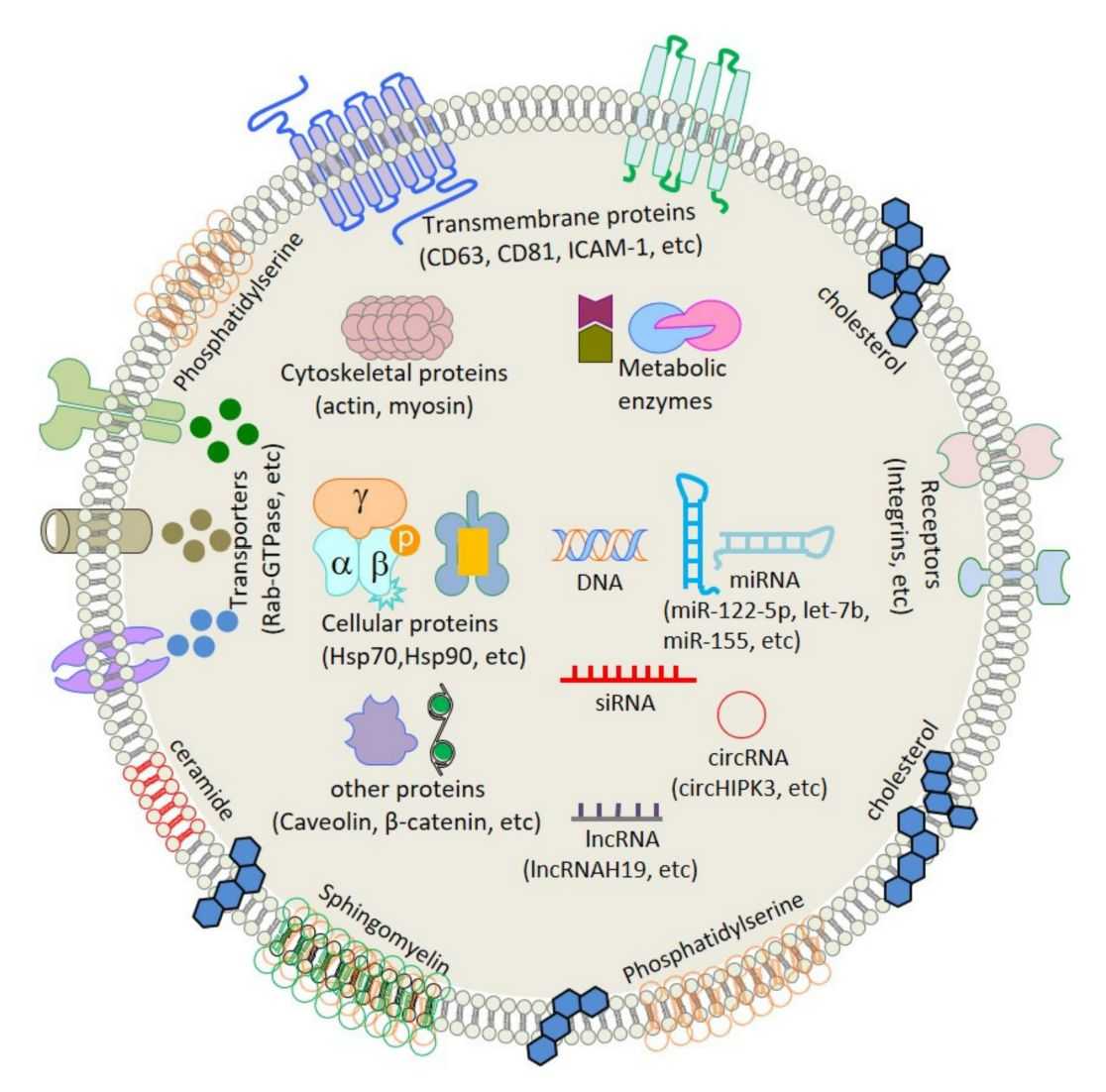
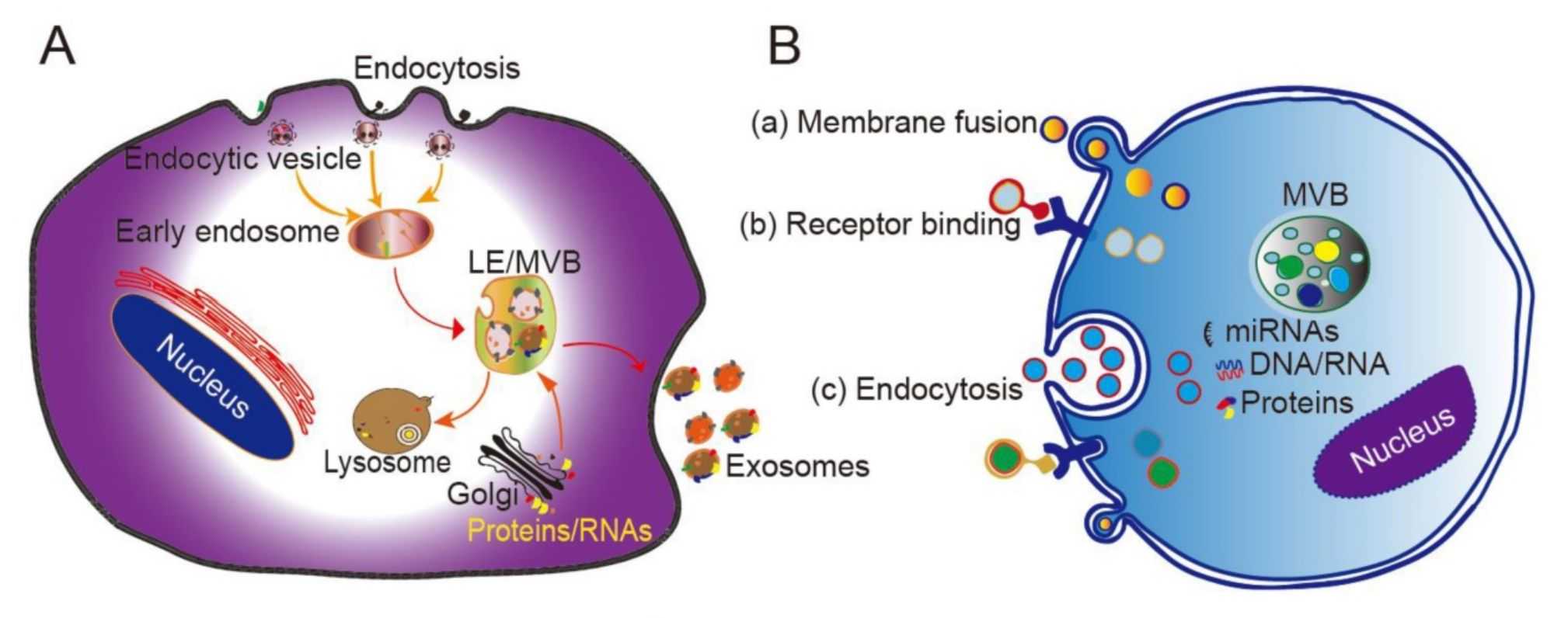
Exosome Surface Functionalization Service with Targeting Ligands and Peptides
Exosomes are increasingly recognized as versatile nanoscale carriers for biomolecular delivery and cell communication studies. However, native exosomes often lack targeting specificity, limiting their utility in complex biological systems.
At Creative Biostructure, our exosome surface functionalization service with targeting ligands and peptides enables precise surface engineering to enhance receptor-specific binding, cellular uptake, and experimental control. By conjugating carefully selected ligands or peptides onto exosome membranes, we help researchers design targeted delivery systems for advanced research and preclinical applications.
Why Surface Functionalization Matters
| Challenges Without Surface Engineering | Benefits of Functionalized Exosomes |
|---|---|
| Non-specific biodistribution | Improved targeting specificity via ligand–receptor interactions |
| Limited targeting capability | Enhanced cellular internalization efficiency |
| Rapid clearance in biological systems | Reduced off-target interactions |
| Suboptimal uptake efficiency | Greater experimental reproducibility and control |
What Is Exosome Surface Functionalization with Targeting Ligands and Peptides
Exosome surface functionalization with targeting ligands and peptides refers to the process of modifying the exosomal membrane with specific binding moieties that enable selective interaction with target cells or tissues.
These targeting elements include:
- Short peptides with receptor-binding affinity
- Cell-penetrating peptides (CPPs)
- Small-molecule ligands
- Synthetic targeting motifs
Unlike antibody-based modification, ligand and peptide functionalization offers:
- Smaller molecular size for improved tissue penetration
- Lower immunogenicity
- Greater flexibility in design and conjugation
- Cost-effective and scalable production
This strategy is widely used in receptor-mediated delivery studies, targeted uptake analysis, and biomolecular transport research.
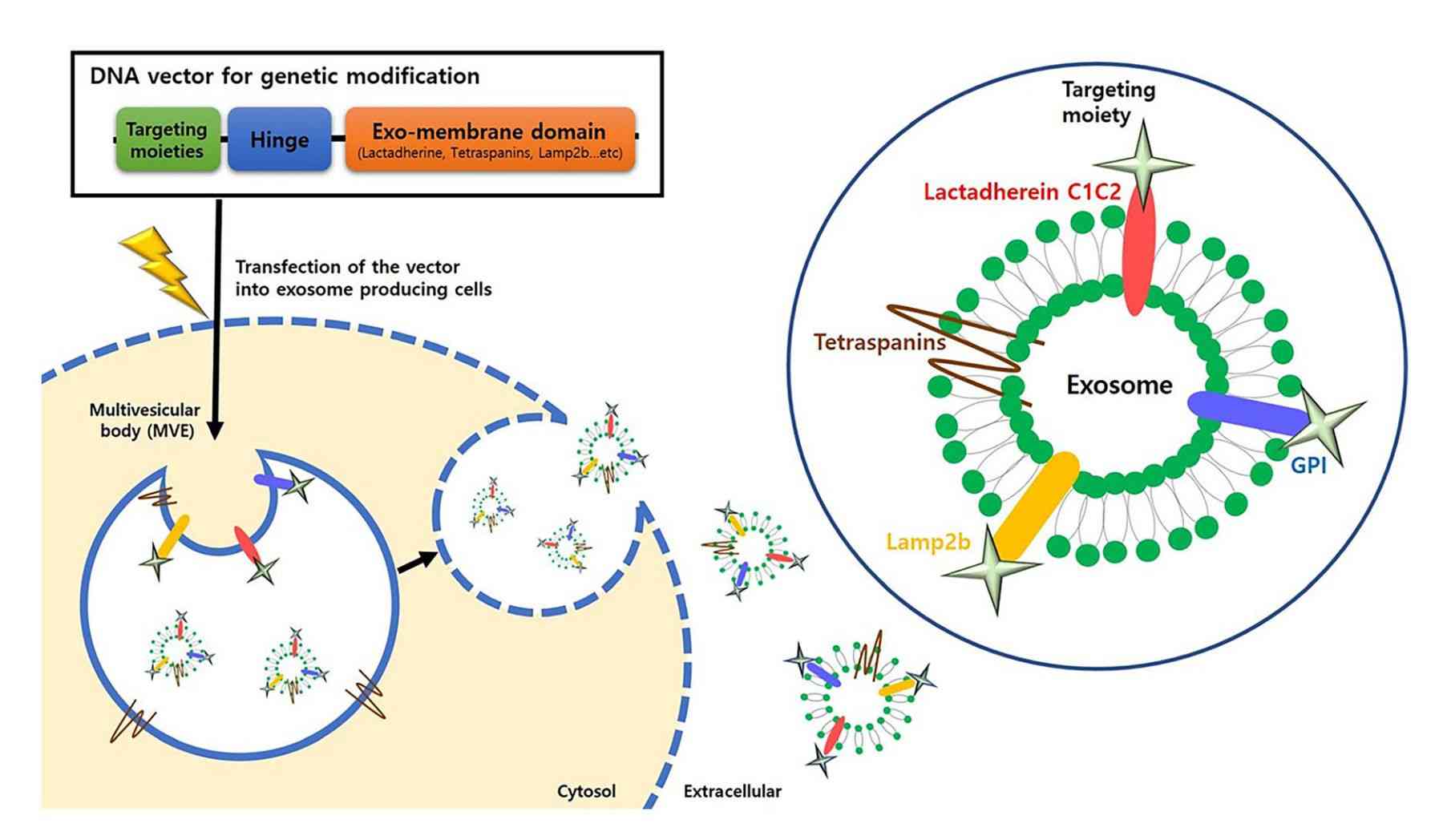
 Figure 1. Genetic Engineering of Peptide-Functionalized Exosomes for Targeted Delivery. (Qiu M, et al., 2024)
Advantages Over Other Surface Modification Strategies
| Feature | Ligands & Peptides | Antibodies | Aptamers |
|---|---|---|---|
| Molecular Size | Small | Large | Medium |
| Tissue Penetration | Excellent | Limited | Good |
| Immunogenicity | Low | Moderate | Low |
| Stability | High | Moderate | High |
| Engineering Flexibility | High | Moderate | High |
Ligand- and peptide-based functionalization is particularly advantageous in applications requiring efficient cellular internalization and minimal steric hindrance.
Our Ligand and Peptide Functionalization Strategies
We offer multiple validated and customizable approaches to ensure optimal functionalization efficiency and biological performance.
1. Chemical Conjugation
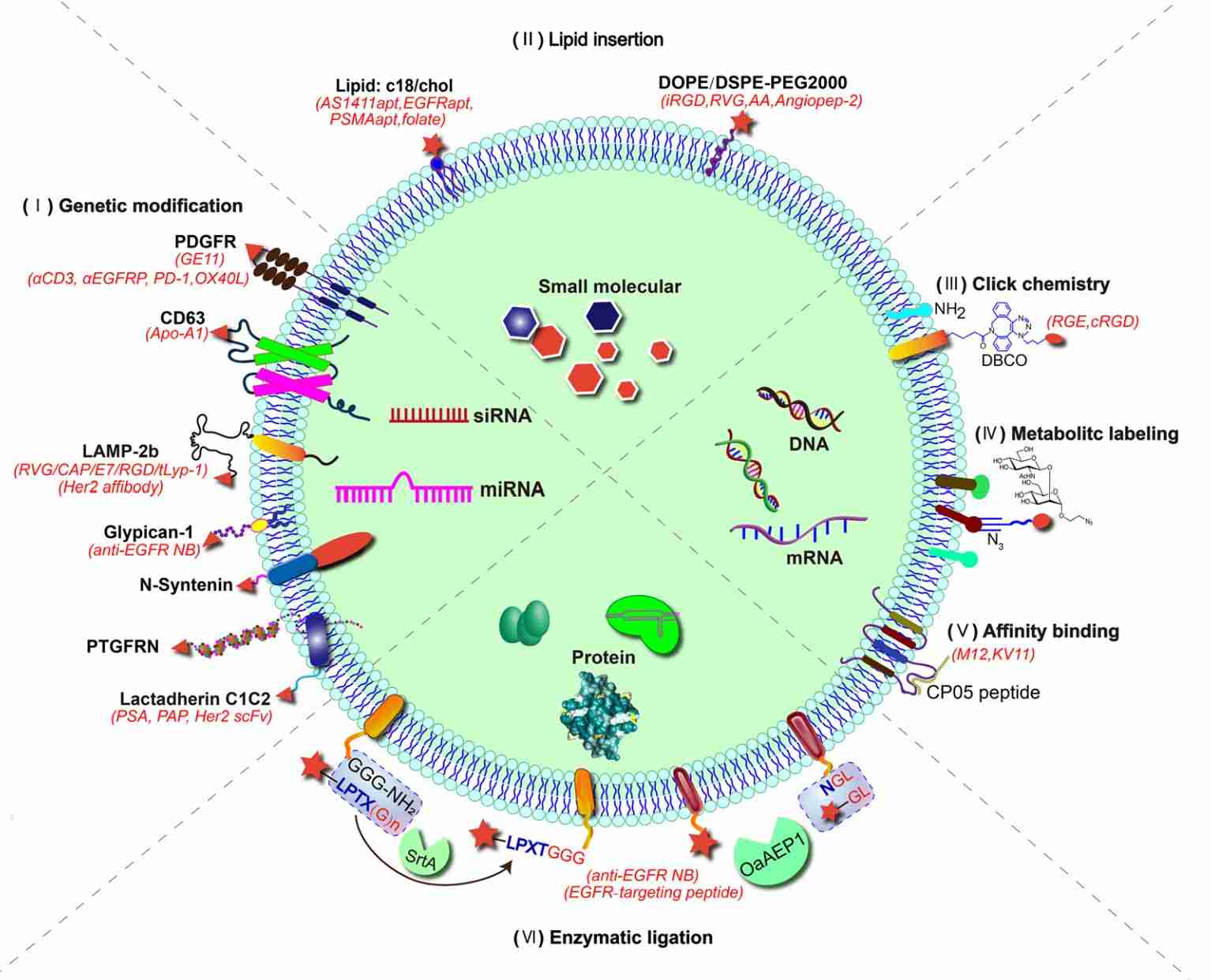
- Click chemistry (azide-alkyne cycloaddition)
- NHS-ester coupling
- Maleimide-thiol linkage
Best for: Stable, covalent attachment with high reproducibility
2. Lipid Insertion (Post-Insertion Method)
- Integration of ligand-conjugated lipids (e.g., DSPE-PEG-ligand)
- Spontaneous insertion into exosome membranes
Best for: Mild conditions preserving exosome integrity
3. Genetic Engineering-Based Display (Optional)
- Fusion of targeting peptides with exosomal membrane proteins (e.g., Lamp2b, CD63)
Best for: Endogenous and stable ligand presentation
4. Hybrid Engineering Approaches
- Combination of cargo loading and surface targeting
- Multi-functional exosome design
Types of Targeting Ligands and Peptides We Support
| Targeting Peptides | Ligand Types |
|---|---|
|
|
Service Workflow
Our streamlined workflow ensures reproducibility, customization, and high-quality outputs:
Consultation & Target Assessment
Evaluation of target receptors, ligand selection, and project goals
Ligand/Peptide Design & Strategy Selection
Selection of optimal conjugation or engineering approach
Functionalization Optimization
Small-scale testing to refine efficiency and stability
Surface Engineering Execution
Scaled production under controlled conditions
Characterization & Validation
Verification of modification efficiency and targeting performance
Delivery & Technical Support
Data reporting and follow-up consultation
 Figure 2. Exosome Surface Functionalization Workflow with Targeting Ligands and Peptides. (Creative Biostructure)
Characterization and Quality Control
We provide comprehensive analytical validation to ensure functionalized exosomes meet research requirements:
- Size & morphology analysis: NTA, DLS, TEM
- Surface modification validation: fluorescence labeling, Western blot, flow cytometry
- Ligand density quantification
- Target binding assays
- Cellular uptake studies
- Stability and integrity testing
Applications of Ligand-Functionalized Exosomes
Our service supports a wide range of research applications:
- Targeted drug delivery research
- RNA delivery studies (siRNA, miRNA, mRNA)
- Cancer cell targeting and uptake analysis
- Blood-brain barrier (BBB) transport studies
- Cell-type-specific communication studies
- Functional biomolecule delivery research
How to Start Your Project
We provide flexible project initiation options to support different research scenarios. You can choose to provide your own exosomes or use our end-to-end service.
Project Initiation Options
| Option | Description | Best For | What You Need to Provide |
|---|---|---|---|
| Client-Provided Exosomes | We perform surface functionalization directly on your supplied exosome samples using optimized ligand or peptide conjugation strategies. | Researchers with established exosome systems or proprietary samples |
|
| End-to-End Service (Recommended) | We manage the full workflow, including exosome production, ligand/peptide design, functionalization, and validation. | Researchers seeking a turnkey solution with minimal experimental burden |
|
Quick Project Kickoff Requirements
To help us design the optimal strategy, please provide the following information:
| Information Type | Details |
|---|---|
| Target Information | Cell type, receptor, or biological system of interest |
| Targeting Strategy | Preferred ligand/peptide (if available) or targeting concept |
| Application Goal | Uptake study, targeting validation, delivery research, etc. |
| Special Requirements | Any specific conditions, controls, or analytical needs |
What Deliverables Will You Receive
Our service provides well-defined deliverables to support reproducibility, validation, and downstream applications.
| Category | Description |
|---|---|
| Functionalized Exosome Samples | Ligand- or peptide-modified exosomes with defined concentration, volume, and storage conditions |
| Surface Modification Validation | Confirmation of ligand/peptide conjugation via fluorescence labeling or biochemical assays |
| Physicochemical Characterization | Size distribution (NTA/DLS), morphology (TEM), and purity assessment |
| Functional Evaluation (Optional) | Target binding and cellular uptake analysis compared with unmodified exosomes |
| Methods & Protocol Summary | Key experimental parameters and functionalization strategy for reproducibility |
| Project Report | Consolidated results with data interpretation and technical insights |
| Technical Support | Post-delivery consultation and guidance for downstream applications |
Why Choose Creative Biostructure
- Extensive expertise in exosome engineering and modification
- Multiple validated functionalization platforms
- Flexible customization for diverse research needs
- Integrated services: cargo loading, surface modification, and characterization
- Scalable workflows for exploratory and preclinical research
Case Study
Case: Peptide-Mediated Surface Anchoring Enables Efficient Targeted Exosome Delivery
Background
Efficient and stable loading of oligonucleotides onto exosomes remains a major challenge, particularly when high delivery efficiency and targeting specificity are required.
Methods
Researchers developed a peptide-guided surface functionalization strategy by conjugating an antisense oligonucleotide (PMO-146b) to the CP05 targeting peptide, which specifically binds to the exosomal membrane protein CD63.
This enabled:
- Direct anchoring of cargo onto exosome surfaces
- Formation of a stable exosome-peptide-cargo complex (ePPMO-146b)
Results
- Enhanced cellular uptake: Peptide-functionalized exosomes showed significantly improved internalization compared to non-modified controls
- Efficient cargo delivery: Surface-anchored oligonucleotides were successfully transported into recipient cells
- Targeted accumulation: Engineered exosomes demonstrated preferential enrichment in tumor tissues in vivo
- Maintained biocompatibility: No significant systemic toxicity was observed
 Figure 3. Enhanced Cellular Uptake of Peptide-Functionalized Exosomes via CP05-Mediated Surface Engineering. (Yu S, et al., 2024)
Conclusion
This study demonstrates that peptide-based surface functionalization is an effective strategy for exosome targeting and cargo delivery, providing a robust platform for engineering receptor-guided exosome systems.
Enhance the specificity, efficiency, and performance of your exosome-based research systems with tailored ligand and peptide functionalization strategies. Contact us to discuss your project and receive a customized solution for targeted exosome engineering.
References
- Qiu M, Zou J, Yang Z, et al. Strategies for targeting peptide-modified exosomes and their applications in the lungs. International Journal of Nanomedicine. 2024: 8175-8188.
- Yu S, Liao R, Bai L, et al. Anticancer effect of hUC-MSC-derived exosome-mediated delivery of PMO-miR-146b-5p in colorectal cancer. Drug Delivery and Translational Research. 2024, 14(5): 1352-1369.
Frequently Asked Questions
For any inquiries, our support team is ready to help you get technical support for your research and maximize your experience with Creative Biostructure.